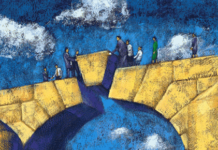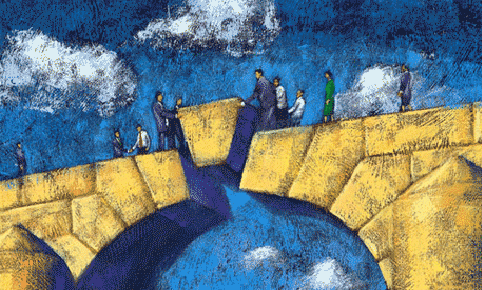
The socio economic gap between communities having access to information and communication technologies (ICT) and those that do not is a social/political issue which is referred to as digital divide. Digital divide occurs when people can use information and communication technologies effectively because of their geographical location, difference in levels of technical skills, living standards and literacy, access to quality and useful digital content and those who cannot. Being India a developing country, advances in ICTs have brought a lot of opportunities and perhaps a lot of challenges as well. One of the main challenges is digital divide. Following are the major challenges in the path towards digital opportunity such as poverty, illiteracy, political instability and poor ICT infrastructure.
Economic Divide
In its simplest form, the digital divide is evidenced in the fact that some people can’t afford to buy a computer. Although politicians always talk about this point, it’s growing more irrelevant with each passing day, at least in the industrialized world. We should recognize that for truly poor developing countries, computers will remain out of the average citizen’s reach for 20 years or more.
Usability Divide
Due to the complicated view of computer applications many people couldn’t use a computer even if they got one for free that makes it far worse than the economic divide. Almost 40% of the population has lower literacy skills, and yet few websites follow the guidelines for writing for low-literacy users. A university degree is required to comprehend even the government sites targeting the poor citizens. The second biggest accessibility problem is for senior citizens. But least interest is shown to make the websites easier for the older users. Even though seniors are the main remaining source of growth in Internet use, companies are still endlessly fascinated by young users and ignore older, richer users who would be much more loyal customers – if only someone bothered to sell to them.
Empowerment Divide
It however, is the hard one: even if computers and the Internet were extraordinarily easy to use, not everybody would make full use of the opportunities that such technology affords. Participation inequality is one exponent of the empowerment divide that has held constant throughout all the years of Internet growth. In social networks and community systems, about 90% of users don’t contribute, 9% contribute sporadically, and a tiny minority of 1% accounts for most contributions. Hence even if one is provided with computer with the internet, also, the contents of the applications made easy, it is the empowerment divide that enforces the gap responsible for above said divide.
We all, now a days, realize that the technology is growing but it is limited to the area or people who can use it. The disparity of information access and maximum yield of communication technologies among people termed as digital divide, which now a days realizes its presence not only in developing countries like India but also world widely. Although India has made encouraging efforts to bridge the gap by initiating a number of projects and programs for rural and remote locations, a lot more needs to be done to bring the people into the information society. All that required is strong determination among people, an improved literacy and skills among people living in the inert areas, good policy–makers and political support to bridge the digital divide. Also both man and woman should get equal access to computer. Faster networks, higher level machines, more complex software and more capable professionals and above all bringing in a positive attitude towards moving to e-governance, educating the bureaucrats about the need for change and imparting training to use the technology effectively so that they can join the hands with private organizations to provide low cost access devices. Besides all the factors stated above a stable and effective government at the centre as well as in state will definitely enhance the world of information seekers.