Thermodynamics is a fundamental natural science. Natural laws are the invisible government of the earth. A spirit is manifest in the law of the universe.
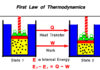
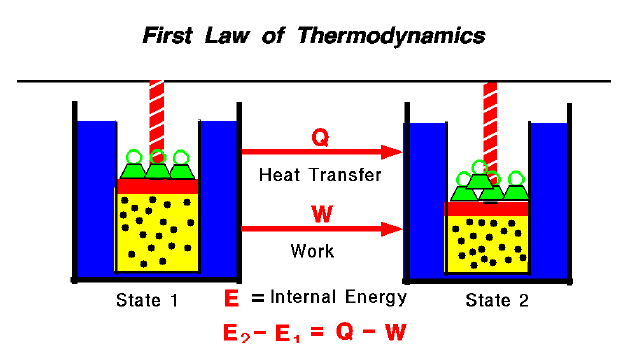
First law of thermodynamics is quite easy and easy to grasp in common use. It says “Energy can neither be created nor destroyed”.
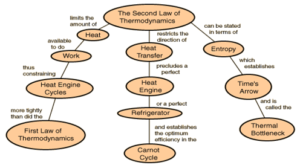
Students view the Second Law of Thermodynamics as something that corresponds to the theoretical part rather than an important engineering tool. Second law of thermodynamics uses concepts like energy, Reversible Work, Irreversibility and second law efficiency. These concepts have direct relevance with the aspects of daily life. These concepts are soft and difficult to quantize. Quality plays an important role as quantity.
It is not important how much time we have (1st law of thermodynamics)
but rather
how effectively we use it (2nd law of thermodynamics)
Reversible work is the best job a person can do in some specified conditions.
Irreversibility is the difference between the reversible work and the actual work done under same specified conditions.
Our purpose is to identify irreversibility and minimize them to maximize performance.
Exergy is the maximum amount of work he/she can do at the particular time and place. It is difficult to quantify because of the interdependence of the physical and the intellectual capabilities of a person. To minimize energy destruction, there should be a clear match between available alertness and required alertness.
First law efficiency makes no reference to the best possible performance.
Second law Efficiency can be viewed as the performance of that person relative to the best possible performance under the circumstances.
Happiness is clearly related to the second law efficiency. Small children are the happiest human being because there is little they can do, but they do it so well, considering their limited capabilities.
Energy represents the opportunities that we have.