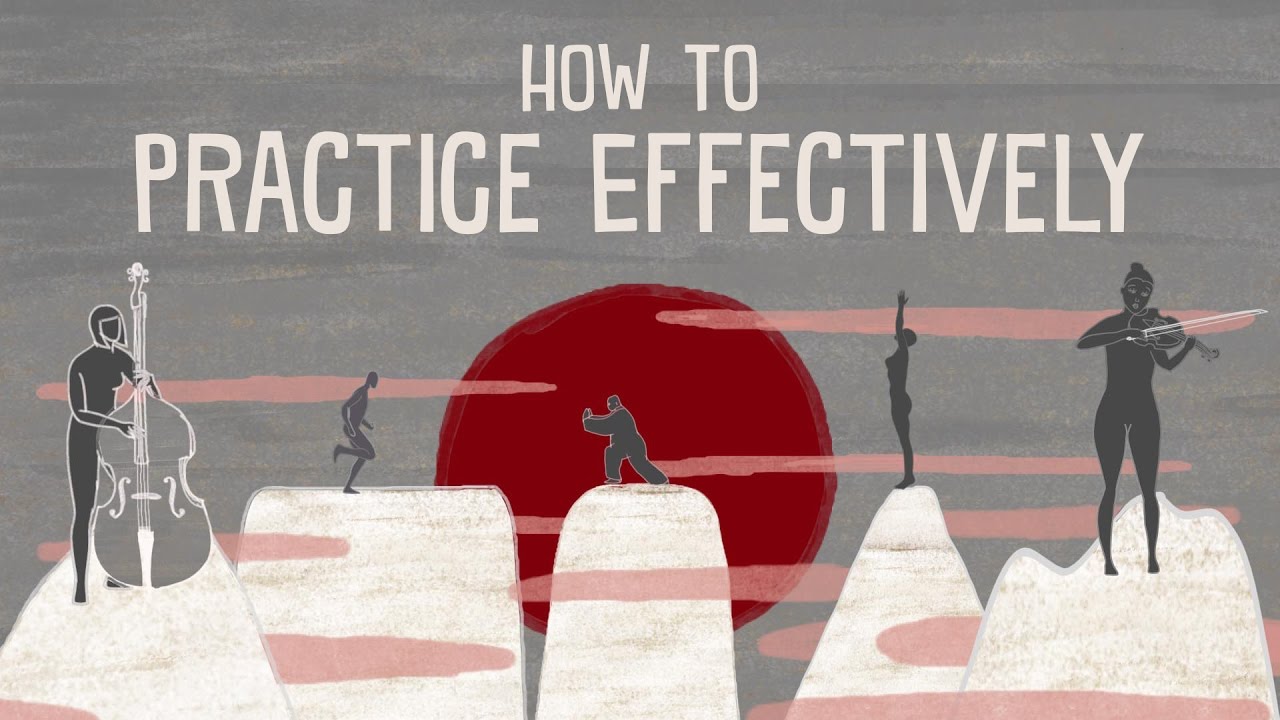
To dominate any physical talent takes practice. Practice is the recurrence of an act with the purpose of enhancement. It helps us achieve with more simplicity, speed, and self-confidence. But what does preparation actually do to make us enhanced at certain things? Annie Bosler and Don Greene describe how practice influences the internal functioning of our brains.
Practice is a physical action but it is also tough mental work — if you are doing it correctly. A new video posted by TED-Ed gets down to the scientific fundamentals of what good practice is like, and what effect does it have on your brain.
As Annie Bosler and Don Greene, the makers of this TED-Ed lesson points out that this suggestion can be applied to anything and everything from music to sports. They describe the efficient practice as “constant, deeply focused and target[ing] content or flaws that lie at the edge of one’s present capabilities.” That is a different way of saying: Don’t misuse your time practising the things you previously know, just to use up those minutes.
More of their precise suggestion, with each point strengthened by research:
- “Focus on the job on hand”. Put an end to all those digital interruptions. No more excuses.
- “Begin slowly, or in unhurried motion. Synchronisation is achieved with repetitions.” Get it accurate at a slow rate and then put efforts on growing your pace while still playing the music right.
- “Regular repetition with fixed breaks is regular practice routine of influential performers.” Do what many professionals do: divide your practice time into shorter, super-concentrated slots, working numerous times a day.
- “Rehearse in your brain, in vivid aspects.” Imagine playing your music without really playing it. Put yourself through the music, note by note. Visualise what it feels like to press that key, or take that gasp, every step of the way.

Obviously, their suggestions about practising aren’t something new; fairly a bit of it has been floating around for some time now, like in a string of posts published here on Deceptive Cadence a few years ago. But having a better understanding of why and how it works is inspirational — and helps you emphasise on good habits
When we reiterate an activity, such as playing the violin, we build up the neural wiring in the brain. You might have heard a saying that “practice is like doing a push-up for the mind”. This video from Ted-Ed discovers what actually takes place in the brain when we go through the motions of perfecting a skill.
There is a fatty stuff situated in the white part of the brain called myelin, and it provides a “sheath” that guards nerve fibres, avoids energy loss, and helps information move along the neural path. When we recur an activity, the myelin coatings solidify, leading to a more capable transportation of information.
So as an alternative of building muscle memory, you are in fact building up myelin in neural paths—creating a “super highway of information linking your brain to your muscles,” as Don Greene, the speaker of the video, notes.
3 Ways to Get the Most Out of Your Practice Time
- Minimise distractions.
In one study, researchers observed 260 students studying and inferred that they were able to continue on a task on an average of six minutes at a time. The problem? Social media, texting—our obsession to devices, in general.
- Take breaks.
Monotonous tasks work finest with breaks. Studies show best performers divide their practice time into 50-60 hour slots over several tasks.
- Picture yourself winning.
Studies imply that once we have practiced something adequately, the thought of winning will automatically strengthen your mind.
Watch the entire video for a deeper understhttps://www.youtube.com/watch?v=f2O6mQkFiiwanding of the topic here: