

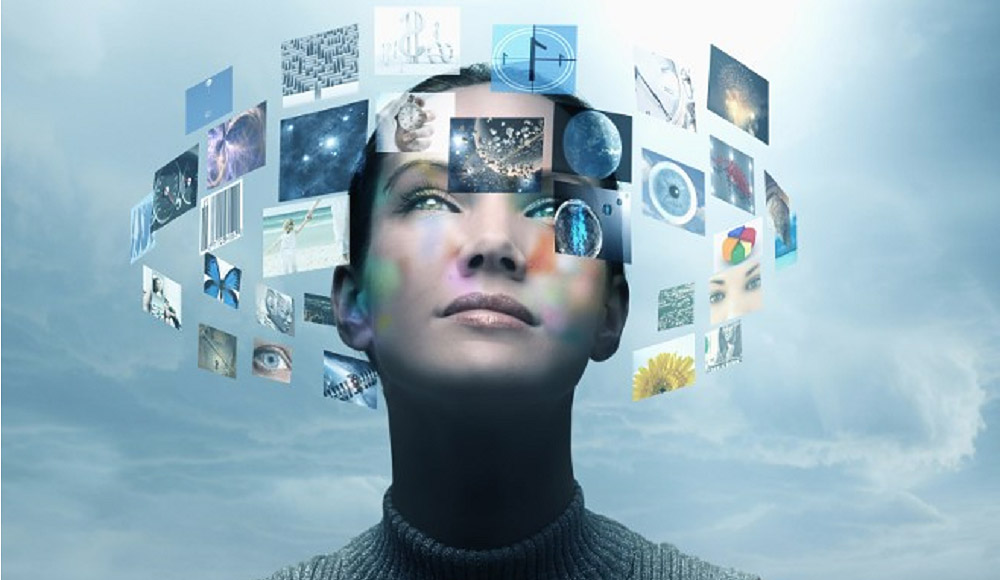
Virtual Reality
Virtual reality is an artificial environment that is developed with Softwares. It offers to the user in such a way that the user suspends belief and accepts it as a real environment. On a computer, this is mainly experienced through two of the five senses: sight and sound.
The easiest form of virtual reality is a 3-D image that can be explored interactively at a personal computer, generally by manipulating keys or the mouse so that the content of the image moves in some direction or zooms in or out. More complicated efforts involve such approaches like wrap-around display screens, actual rooms augmented with wearable computers, and haptics devices that let you experience the display images.
What is Virtual Reality
The meaning of virtual reality comes, naturally, from the words for both ‘virtual’ and ‘reality’. The definition of ‘virtual’ is near and reality is what we understand as human beings. So the word ‘virtual reality’ basically means ‘near-reality’. This could, of course, mean anything but it generally refers to a specific type of reality emulation. We know the world of our senses and perception systems.
In technical terms- Virtual Reality
Answering “what is virtual reality” in technical language is straight-forward. Virtual reality is the word that is used to describe a three-dimensional, computer-generated environment which can be explored and interacted with by a person. The person will become part of this virtual world or is immersed within this environment and whilst there, is able to control objects or perform a series of actions.
How is virtual reality achieved
Although we talk about a few historical early forms of virtual reality, today the virtual reality is generally implemented using computer technology. There are the variety of systems that are used for this intention, such as headsets, Omni-directional treadmills, and special gloves. These are used to actually inspire our senses together in order to create the illusion of reality.
This is not easy as it sounds since our senses and brains are evolved to give us with a synchronized and mediated practice. If anything is even a little off we can usually tell. This is where you will hear words such as immersive-ness and realism enter the conversation. These issues that separate convincing virtual reality experiences from jarring or unpleasant ones are partially technical and partially conceptual. Virtual reality technology needs to take our bodily processes into account.
Need of virtual reality
Wherever it is too dangerous, costly or not practical to do something, in reality, virtual reality is the answer. From trainee fighter pilots to the medical application trainee surgeons, virtual reality allows us to take virtual risks in order to increase real world experience. As the cost of virtual reality do not go up. It becomes more mainstream. You can expect more uses, such as education or production applications, to come to the fore. Virtual reality and its cousin augmented reality could substantively modify the way we interface with our digital technologies. Continuing the trend of humanizing our technology.

















Good informative blog, helps to understand need and implementation of virtual reality. It can revolutionize the medical technologies. It is good platform for imaginations to sketch on actual reality.
Yes, there are so many companies working openly or secretly on this technology. One example is Apple. Apple is rumored to have a secret research unit comprising hundreds of employees working on AR and VR, exploring ways the emerging technologies could be used in future Apple products. Source: MacRumours
Comments are closed.